
Follow West Liberty Nursing and Rehabilitation on Facebook! Click Here

To see a list of frequently asked questions please Click Here

West Liberty | Nursing & Rehabilitation

Latest News

Latest News

Discussing Health Decisions with Your Doctor

December 8, 2025

Ask About Different Treatment Options

You will benefit most from a treatment when you know what is happening and are involved in making decisions. Make sure you understand what your treatment involves and what it will or will not do. Have the doctor give you directions in writing and feel free to ask questions. For example: “What are the pros and cons of having surgery at this stage?” or “Do I have any other choices?”

If your doctor suggests a treatment that makes you uncomfortable, ask if there are other treatments that might work. If cost is a concern, ask the doctor if less expensive choices are available. The doctor can work with you to develop a treatment plan that meets your needs.

Here are some things to remember when deciding on a treatment:

  • Discuss different treatment choices. There are different ways to manage many health conditions, especially chronic conditions like high blood pressure and cholesterol. Ask what your options are.
  • Discuss risks and benefits of treatment options. Once you know your options, ask about the pros and cons of each one. Find out what side effects might occur, how long the treatment would continue, and how likely it is that the treatment will work for you.
  • Consider how a treatment may affect your life. When thinking about the pros and cons of a treatment, don’t forget to consider its impact on your overall life. For instance, will one of the side effects interfere with a regular activity that means a lot to you? Is one treatment choice expensive and not covered by your insurance? Doctors need to know about these practical matters so they can work with you to develop a treatment plan that meets your needs.

Questions to Ask About Treatment Options

  • Are there any risks associated with the treatment?
  • How soon should treatment start? How long will it last?
  • Are there other treatments available?
  • How much will the treatment cost? Will my insurance cover it?

Talking with Medical Specialists

Your doctor may send you to a specialist for further evaluation, or you may request to see a specialist yourself. Your insurance plan may require you to have a referral from your primary doctor. A visit to the specialist may be short. Often, the specialist already has seen your medical records or test results and is familiar with your case. If you are unclear about what the specialist tells you, ask questions.

For example, if the specialist says you have a medical condition that you aren’t familiar with, you may want to say something like: “I don’t know much about that condition. Could you explain what it is and how it might affect me?” or “I’ve heard that is a painful problem. What can be done to prevent or manage the pain?”

You also may ask for written materials to read, or you can call your primary doctor to clarify anything you haven’t understood.

Ask the specialist to send information about any diagnosis or treatment to your primary doctor. This allows your primary doctor to keep track of your medical care. You also should let your primary doctor know at your next visit how well any treatments or medications the specialist recommended are working.

Questions to Ask Your Specialist

  • What is my diagnosis?
  • What treatment do you recommend? How soon do I need to begin the new treatment?
  • Will you discuss my care with my primary doctor?

If You Need Surgery

In some cases, surgery may be the best treatment for your condition. If so, your doctor will refer you to a surgeon. Knowing more about the operation will help you make an informed decision about how to proceed. It also will help you get ready for the surgery, which makes for a better recovery.

Ask the surgeon to explain what will be done during the operation and what reading material, videos, or websites you can look at before the operation.

Find out if you will have to stay overnight in the hospital or if the surgery can be done on an outpatient basis. Will you need someone to drive you home? Minor surgeries that don’t require an overnight stay can sometimes be done at medical centers called ambulatory surgical centers.

Questions to Ask Your Surgeon

  • What is the success rate of the operation? How many of these operations have you done successfully?
  • What problems occur with this surgery? What kind of pain or discomfort can I expect?
  • What kind of anesthesia will I have? Are there any risks associated with its use in older people?
  • Will I have to stay in the hospital overnight? How long is recovery expected to take? What does it involve? When can I get back to my normal routine?

Do you have questions about palliative care and hospiceRead about how to care for the seriously ill.

Discuss How Prevention Can Improve Your Health

Doctors and other health professionals may suggest you change your diet, activity level, or other aspects of your life to help you deal with medical conditions. Research has shown that these changes, particularly an increase in exercise, have positive effects on overall health.

Until recently, preventing disease in older people received little attention. But, things are changing. We now know that it’s never too late to stop smokingimprove your diet, or start exercising. Getting regular checkups and seeing other health professionals, such as dentists and eye specialists, helps promote good health. Even people who have chronic diseases, like arthritis or diabetes, can prevent further disability and, in some cases, control the progress of the disease.

If a certain disease or health condition runs in your family, ask your doctor if there are steps you can take to help prevent it. If you have a chronic condition, ask how you can manage it and if there are things you can do to keep it from getting worse. If you want to discuss health and disease prevention with your doctor, say so when you make your next appointment. This lets the doctor plan to spend more time with you.

It is just as important to talk with your doctor about lifestyle changes as it is to talk about treatment. For example: “I know that you’ve told me to eat more dairy products, but they really disagree with me. Is there something else I could eat instead?” or “Maybe an exercise class would help, but I have no way to get to the senior center. Is there something else you could suggest?”

As with treatments, consider all the alternatives, look at pros and cons, and remember to take into account your own point of view. Tell your doctor if you feel his or her suggestions won’t work for you and explain why. Keep talking with your doctor to come up with a plan that works.

Many doctors now recommend that older people try to make physical activity a part of everyday life. When you are making your list of things to talk about with your doctor, add exercise. Ask how exercise would benefit you, if there are any activities you should avoid, and whether your doctor can recommend any specific kinds of exercise.

Start exercising with the links and free videos from NIA, developed specifically for older people.

Questions to Ask Your Doctor About Prevention

  • Is there any way to prevent a condition that runs in my family—before it affects me?
  • Are there ways to keep my condition from getting worse?
  • How will making a change in my habits help me?
  • Are there any risks in making this change?
  • Are there support groups or community services that might help me?
  • How to Evaluate Health Information Online
  • Many people search online to find information about medical problems and health issues. However, not all health information on the web is of equal quality. Read about how to find websites that are accurate and reliableDon’t forget to talk with your doctor about what you’ve learned online.

To learn more, please visit https://www.nia.nih.gov/health/medical-care-and-appointments/discussing-health-decisions-your-doctor.

Falls and Fractures in Older Adults: Causes and Prevention

December 2, 2025

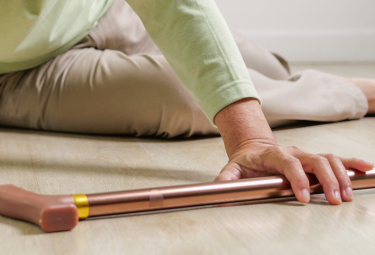
A simple accident like tripping on a rug or slipping on a wet floor can change your life. If you fall, you could break a bone, which thousands of older adults experience each year. For older people, a broken bone can also be the start of more serious health problems and can lead to long-term disability.

If you or an older adult in your life has fallen, you’re not alone. More than one in four people age 65 years or older fall each year. The risk of falling — and fall-related problems — rises with age. However, many falls can be prevented. For example, exercising, managing your medications, having your vision checked, and making your home safer are all steps you can take to prevent a fall.

Many older adults fear falling, even if they haven’t fallen before. This fear may lead them to avoid activities such as walking, shopping, or taking part in social activities. But staying active is important to keeping your body healthy and actually helps to prevent falls. So don’t let a fear of falling keep you from being active! Learn about what causes falls and how to lower your risk of falling so you can feel more comfortable with staying active.

What causes falls in older adults?

Many things can cause a fall.

  • Your eyesight, hearing, and reflexes might not be as sharp as they were when you were younger.
  • Certain conditions, such as diabetes, heart disease, or problems with your thyroid, nerves, feet, or blood vessels can affect your balance and lead to a fall.
  • Conditions that cause rushed movement to the bathroom, such as incontinence, may also increase the chance of falling.
  • Older adults with mild cognitive impairment or certain types of dementia are at higher risk of falling.
  • Age-related loss of muscle mass (known as sarcopenia), problems with balance and gait, and blood pressure that drops too much when you get up from lying down or sitting (called postural hypotension) are all risk factors for falling.
  • Foot problems that cause pain, and unsafe footwear such as backless shoes or high heels, can also increase your risk of falling.
  • Some medications can increase a person’s risk of falling because they cause side effects such as dizziness or confusion. The more medications you take, the more likely you are to fall.
  • Safety hazards in the home or community environment can also cause falls.

Steps to take to prevent falls

If you take care of your overall health, you may have a lower chance of falling. Most of the time, falls and accidents don’t just happen for no reason. Here are a few tips to help lessen your risk of falls and broken bones, also known as fractures:

  • Stay physically active. Plan an exercise program that is right for you. Regular exercise improves muscles and makes you stronger. Exercise also helps keep your joints, tendons, and ligaments flexible. Mild weight-bearing activities, such as walking or climbing stairs, may slow bone loss from osteoporosis, a disease that makes bones weak and more likely to break
  • Try balance and strength training exercises. Yoga, Pilates, and tai chi can all improve balance and muscle strength. You can also try lifting weights or using resistance bands to build strength. Learn more about different types of exercises to improve balance and strength.
  • Fall-proof your home. Check out these tips for changes you can make to your home that will help you avoid falls and ensure your safety.
  • Have your eyes and hearing tested. Even small changes in sight and hearing are linked to an increased risk for falls. When you get new eyeglasses or contact lenses, take time to get used to them. Wear your glasses or contacts as your eye doctor advises. If you have a hearing aid, be sure it fits well and wear it.
  • Find out about the side effects of any medicines you take. If a drug makes you sleepy or dizzy, tell your doctor or pharmacist.
  • Get enough sleep. If you are tired, you are more likely to fall.
  • Avoid or limit alcohol. Too much alcohol can lead to balance problems and falls, which can result in hip or arm fractures and other injuries.
  • Stand up slowly. Getting up too quickly can cause your blood pressure to drop. That can make you feel wobbly. Get your blood pressure checked when lying and standing.
  • Use an assistive device if you need help feeling steady when you walk. Using canes and walkers correctly can help prevent falls. If your doctor tells you to use a cane or walker, make sure it’s the right size for you. Walker wheels should roll smoothly. If you borrow walking support equipment from a friend, ask your health care provider to make sure the equipment is the correct size and is safe to use. This is exceptionally important when you’re walking in areas you don’t know well or where the walkways are uneven. A physical or occupational therapist can help you decide which devices might be helpful and teach you how to use them safely.
  • Take extra caution when walking on wet or icy surfaces. These can be very slippery! Use an ice melt product or sand to clear icy areas by your doors and walkways.
  • Keep your hands free. Use a shoulder bag, fanny pack, or backpack to leave your hands free to hold on to railings.
  • Choose the right footwear. To fully support your feet, wear nonskid, rubber-soled, low-heeled shoes. Don’t walk on stairs or floors in socks or in shoes and slippers with smooth soles.
  • Consider staying inside when the weather is bad. Some community services provide 24-hour delivery of prescriptions and groceries, and many take orders over the phone.
  • Always tell your doctor if you have fallen since your last check-up, even if you did not feel pain when you fell. A fall can alert your doctor to a new medical problem or issues with your medications or eyesight that can be corrected. Your doctor may suggest physical therapy, a walking aid, or other steps to help prevent future falls.

What to do if you fall

Whether you are at home or somewhere else, a sudden fall can be startling and upsetting. If you do fall, stay as calm as possible and take the following steps:

  • Breathe. Take several deep breaths to try to relax. Remain still on the floor or ground for a few moments. This will help you get over the shock of falling.
  • Decide if you are hurt. Getting up too quickly or in the wrong way could make an injury worse.
  • Crawl to a sturdy chair. If you think you can get up safely without help, roll over onto your side. Rest again while your body and blood pressure adjust. Slowly get up on your hands and knees, and crawl to a sturdy chair.
  • Slowly sit down in the chair. Put your hands on the chair seat and slide one foot forward so that it’s flat on the floor. Keep the other leg bent so the knee is on the floor. From this kneeling position, slowly rise and turn your body to sit in the chair.
  • Get help. If you are hurt or cannot get up on your own, ask someone for help or call 911. If you are alone, try to get into a comfortable position and wait for help to arrive. Prepare for a fall by keeping a well-charged cordless or mobile phone with you at all times and arrange for daily contact with a family member or friend. Emergency response systems are another option: These systems enable you to push a button on a special necklace or bracelet to call for help. Some smartwatches also have this feature.

Keep your bones strong to prevent fall-related fractures

Having healthy bones won’t necessarily prevent a fall, but if you do fall, healthy bones may help prevent serious injury, such as breaking a hip or other bone. Bone breaks and fracture can lead to a hospital or nursing home stay, long-term disability, or even death. Getting enough calcium and vitamin D can help keep your bones strong. So can staying active. Try to get at least 150 minutes per week of physical activity.

Other ways to maintain bone health include quitting smoking and avoiding or limiting alcohol use. Tobacco and alcohol use may decrease your bone mass and increase your chance of fractures. Additionally, try to maintain a healthy weight. Being underweight increases the risk of bone loss and broken bones.

Osteoporosis is a disease that weakens bones, making them thin and brittle. For people with osteoporosis, even a minor fall may be dangerous. Talk to your doctor about osteoporosis.

Falls are a common reason for trips to the emergency room and for hospital stays among older adults. Many of these hospital visits are for fall-related fractures. You can help lower your risk of fractures by keeping your bones strong and following the tips above to avoid falls.

To learn more, please visit https://www.nia.nih.gov/health/falls-and-falls-prevention/falls-and-fractures-older-adults-causes-and-prevention.

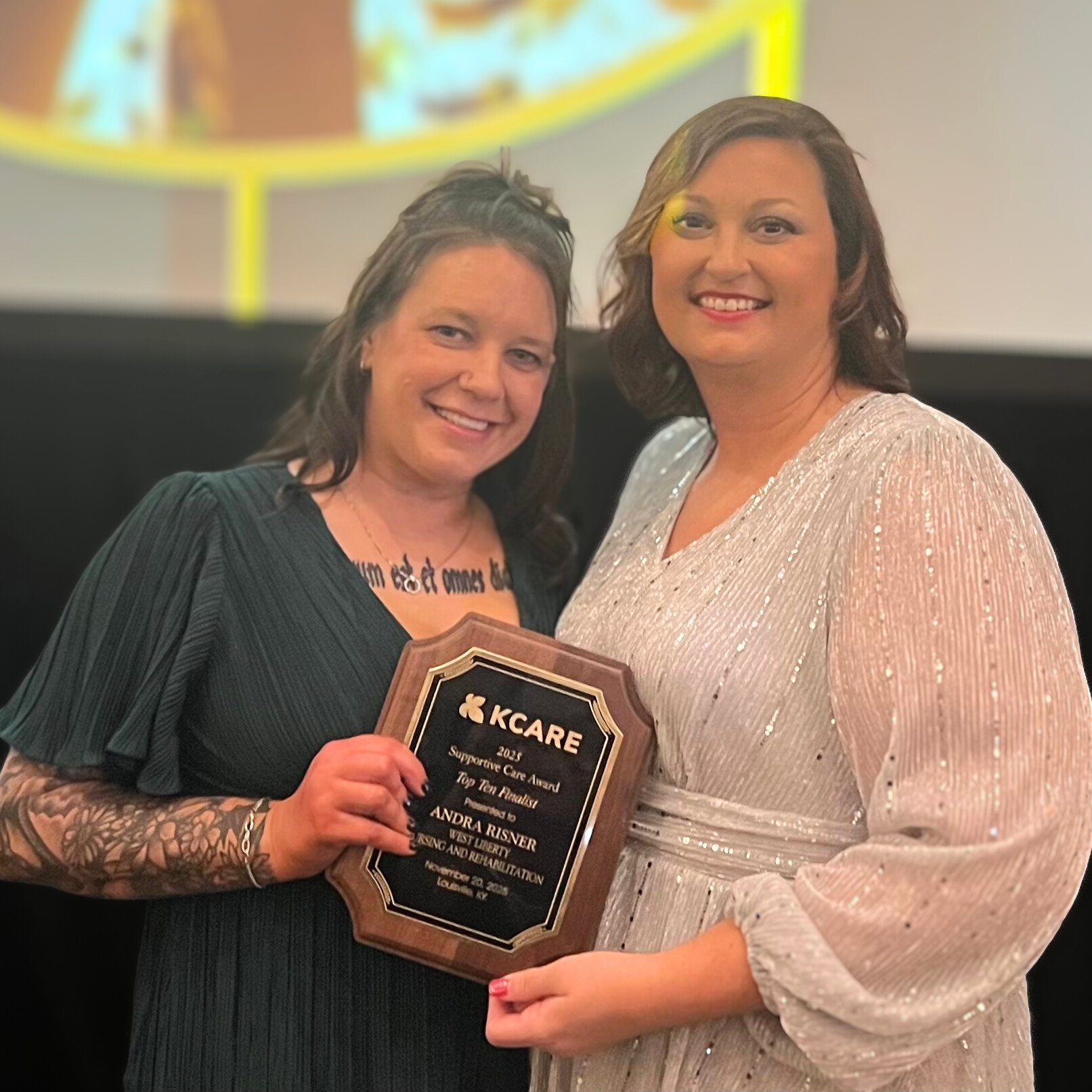
Care Team member Andrea Risner Wins 2025 Quality Award for Supportive Care!

November 26, 2025

On Thursday, November 20, the Kentucky Coalition for Aging Resources and Empowerment (KCARE) recognized top long-term care leaders and heroes in Kentucky at their quality awards banquet. Andrea Risner from West Liberty Nursing and Rehabilitation was honored to be a part of this elite group of leaders in the industry. 

“We were honored to be able to recognize the strength and resilience of our health care heroes. It is a special group of people who dedicate their lives to providing outstanding care and compassion to their residents,” said KCARE President Adam Mather. “This recognition is a testament to their dedication to their residents.” 

The KCARE Quality Awards winners are nominated by their facility. Nominations are then scored blindly by long-term care veterans and mentors. This year, over 400 nominations were submitted for the Quality Awards.  

Long-term care and assisted living providers from across the state attended the Annual Meeting & Expo in Louisville. Participants furthered their knowledge of senior care with a variety of educational options including strategies to cope with stress on the job, hiring and retaining quality staff and regulatory issues. More than 100 vendors exhibited during the expo, showcasing the latest innovations to provide quality care.  

How Much Should I Eat as an Older Adult?

November 25, 2025

Figuring out how much to eat while achieving or maintaining a healthy weight can be difficult. Getting the proper nutrients and eating the right amount for your weight and activity level can contribute to healthy aging. This article provides suggestions for how older adults can get the nutrients they need within a recommended daily number of calories.

How many calories do you need?

A calorie is a unit of measurement that describes how much energy is released when your body breaks down food. Although calorie count alone does not dictate whether a food is nutritious, thinking about how many calories you need can guide healthy eating habits. If you are over age 60 and you want to maintain your current weight, how many calories do you need to eat each day? The Dietary Guidelines suggest:

For a WomanCalories
Not physically active1,600
Moderately active1,800
Active lifestyle2,000-2,200
For a ManCalories
Not physically active2,000-2,200
Moderately active2,200-2,400
Active lifestyle2,400-2,600

Unsure which activity category you’re in? Consult the Dietary Guidelines for definitions of each level. You can increase your physical activity level by adding walking, jogging, dancing, recreational sports, and other similar approaches to your day.

Serving and portion sizes

A “serving size” is a standard amount of a food, such as a cup or an ounce. Serving sizes can help you when choosing foods and when comparing similar items while shopping, but they are not recommendations for how much of a certain food to eat.

The term “portion” means how much of a food you are served or how much you eat. A portion size can vary from meal to meal. For example, at home you may serve yourself two small pancakes in one portion, but at a restaurant, you may get a stack of four pancakes as one portion. A portion size may also be bigger than a serving size. For example, the serving size on the nutrition label for your favorite cereal may be 1 cup, but you may actually pour yourself 1½ cups in a bowl.

Portion size can be a problem when eating out. To keep your portion sizes under control, try ordering smaller appetizers instead of an entrée as your meal, or share an entrée with a friend. Or eat just one-half of an entrée and take the rest home to enjoy as a meal the next day.

Healthy food shifts

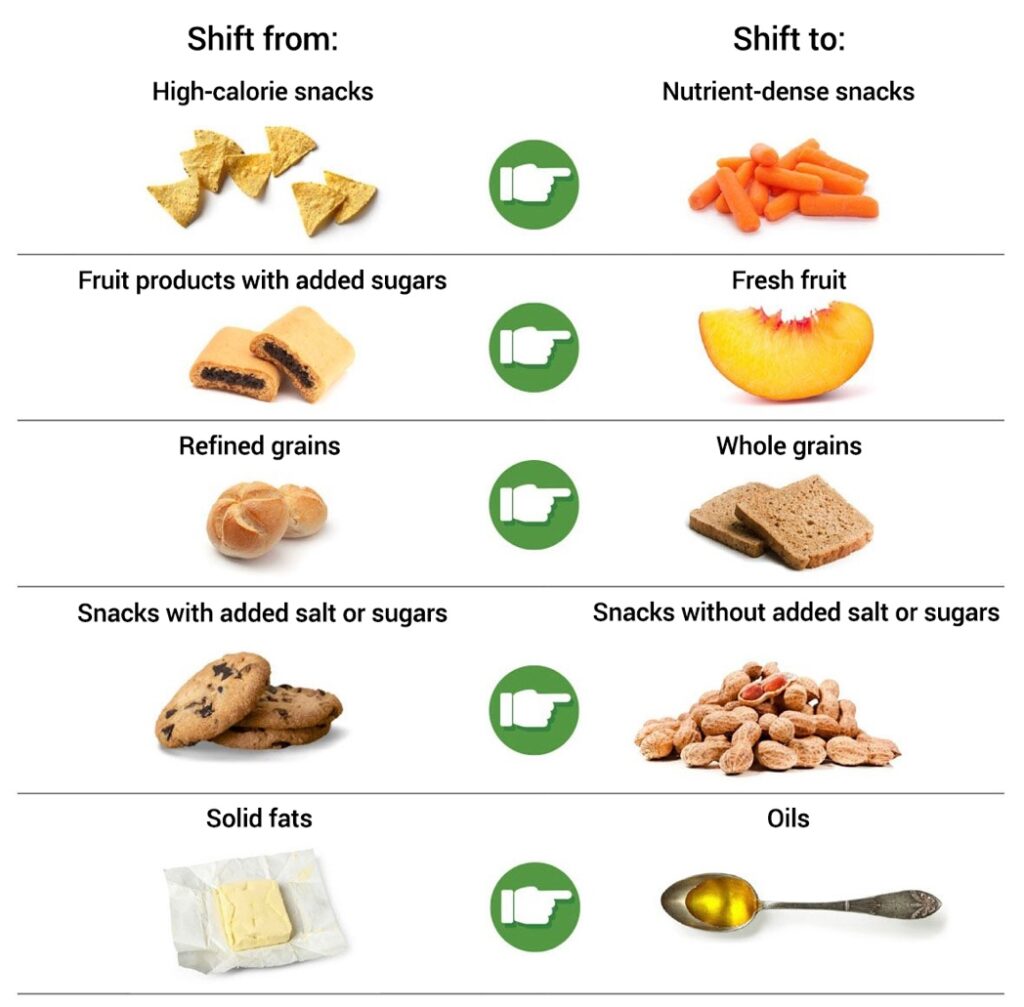
Eating the right amount is important, but so is making sure you’re getting all the nutrients you need. Older adults often need fewer calories, but more nutrients, which makes it essential to eat nutrient-dense foods. To eat nutrient-dense foods across all the food groups, you may need to make some changes in your food and beverage choices. You can move toward a healthier eating pattern by making shifts in food choices over time. Here are some ideas:

Check out these tips for planning healthy meals as you get older.

Healthy beverage shifts

It’s easy to forget about calories you consume from beverages. If you drink sodas, creamy and sweet coffee drinks, or alcohol, swapping them out for healthier options can make a huge difference. There are plenty of beverage options that are low in added sugars, saturated fats, and sodium. Here are some options:

100-calorie snacks

Another way to think about the idea of nutrient-dense and calorie-dense foods is to look at a variety of foods that all provide the same calories. Let’s say that you wanted to have a small snack. You might choose:

  • A 7- or 8-inch banana
  • 20 peanuts
  • 3 cups low-fat popcorn
  • Two regular chocolate-sandwich cookies
  • 1/2 cup low-fat ice cream
  • One scrambled large egg cooked with oil
  • 2 ounces baked chicken breast with no skin

These choices all have about 100 calories but provide different amounts of nutrients. The right choice for you may depend on what else you’re eating throughout the day.

Eating healthy is not just about how much you eat, it’s also about what you eat. Older adults should try to eat foods that are packed with nutrients while limiting foods that are high in calories but provide few nutrients. Swapping out snacks and beverages with nutrient-dense alternatives can help you get the nutrients you need while staying within your recommended number of calories.

To learn more, please visit https://www.nia.nih.gov/health/healthy-eating-nutrition-and-diet/how-much-should-i-eat-quantity-and-quality.

Taking Care of Yourself: Tips for Caregivers

November 10, 2025

Taking care of yourself is one of the most important things you can do as a caregiver. Caregiving is not easy — not for the caregiver and not for the person receiving care. It requires sacrifices and adjustments for everyone. Often, family caregivers must juggle work and family life to make time for these new responsibilities.

Caring for an older adult can also be rewarding. Many people find that caregiving provides a sense of fulfillment and that they like feeling useful and needed. But the ongoing demands of taking care of someone else can strain even the most resilient person. That’s why it’s so important for you to take care of yourself. This article can help you find ways to look out for your own well-being so you can be there for others.

How do you know if you need help?

Caregivers do a lot for others. Because there is so much on their plate, many caregivers don’t spend time taking care of themselves. For example, they are less likely than others to get preventive health services, like annual checkups, and to practice regular self-care. As a result, they tend to have a higher risk of physical and mental health issues, sleep problems, and chronic conditions such as high blood pressure. They are even at an increased risk of premature death.

It’s not always obvious when a person needs help. Watch out for these signs of caregiver stress:

  • Feeling exhausted, overwhelmed, or anxious
  • Becoming easily angered or impatient
  • Feeling lonely or disconnected from others
  • Having trouble sleeping or not getting enough sleep
  • Feeling sad or hopeless, or losing interest in activities you used to enjoy
  • Having frequent headaches, pain, or other physical problems
  • Not having enough time to exercise or prepare healthy food for yourself
  • Skipping showers or other personal care tasks such as brushing your teeth
  • Misusing alcohol or drugs, including prescription medications

Don’t wait until you are completely overwhelmed. Learn what your own warning signs are and take steps to minimize sources of stress where possible.

How can you ask others to help?

When people have asked you if they can lend a hand, have you told them, “Thanks, but I’m fine”? Accepting help from others isn’t always easy. You may worry about being a burden, or you may feel uncomfortable admitting that you can’t do it all yourself. But many caregivers later say they did too much on their own, and they wished they had asked for more support from family and friends.

Understand that many people want to help, and it makes them feel good to contribute. If asking for help is hard for you, here are some tips that may help:

  • Ask for small things at first, if that makes it easier for you. Many large jobs can be broken down into simpler tasks.
  • If you aren’t comfortable asking face-to-face, send a text or email with your request.
  • Consider a person’s skills and interests when thinking about how they could help.
  • Be prepared with a list of things that need to be done, and let the other person choose what they’d like to do.
  • If someone offers to help, practice saying, “Thanks for asking. Here’s what you can do.”
  • Be honest about what you need and what you don’t need. Not every offer is going to be helpful.
  • Be prepared for some people to say “no,” and don’t take it personally.
What else can a caregiver do if they’re feeling overwhelmed?

If you’re feeling overwhelmed by caregiving, tending to your own needs may be the last thing on your mind. But taking time for yourself can actually make you a better caregiver. If you can find small ways to lower your stress and boost your mood, you’ll have more strength and stamina to take care of someone else.

Below are some suggestions that may help when you’re feeling overwhelmed. Remember that you don’t have to do everything all at once, especially if the thought of self-care just makes you feel more exhausted.

  • Be active. Find something active that you enjoy. That might be walking, dancing, gardening, or playing with a pet. Even short periods of exercise can be beneficial.
  • Eat well. Work on having a well-balanced diet that includes a variety of healthy foods. Drink plenty of water every day.
  • Prioritize sleep. Aim to get seven to nine hours of sleep each night. Develop a relaxing bedtime routine to make it easier to fall asleep. Try to go to sleep and get up at the same time each day.
  • Reduce stress. Experiment with relaxation techniques like meditation, tai chi, or yoga. Download a smartphone app with guided meditations or relaxing music. Many of these apps are free.
  • Make time to relax. Carve out time each week to do something you enjoy that has nothing to do with caregiving. It can be as simple as watching a favorite TV show, reading a magazine, or working on a hobby.
  • Keep up with your own health. Make that doctor’s appointment you’ve been putting off. Tell your doctor that you’re a caregiver: They may be able to suggest resources online or in your community.
  • Reach out for support. Talk to a trusted family member or friend or seek counseling from a mental health professional. Join an online or in-person support group for caregivers. These are people who will know what you’re going through and may have suggestions or advice.
  • Take a break if you need it. Ask another family member or friend to step in, hire an aide to come for a few hours a week, or sign up the older person for an adult day care program.
  • Be kind to yourself. You don’t have to pretend to be cheerful all the time. Feelings of sadness, frustration, and guilt are normal and understandable. Express your feelings by writing in a journal or talking with a friend.

Remember that you are doing the best you can and that you are not alone. Many caregivers have trouble tending to their own health and well-being. But give yourself credit for everything you’re doing. Your caregiving makes a big difference in someone else’s life.

If you’re not the primary caregiver, how can you support that person?

In many cases, one person takes on most of the everyday responsibilities of caring for an older person. It tends to be a spouse or the child or sibling who lives closest. If you are not the primary caregiver, you can still play an important role in supporting that person.

Be sure to acknowledge how important the primary caregiver is in the older person’s life. Also, discuss the physical and emotional effects caregiving can have on people. Although caregiving can be satisfying, it also can be very hard work.

You can lighten the primary caregiver’s load by providing emotional support, taking on specific tasks, and even providing full-time care for a short period of time to give the primary caregiver a break. Ask them what you can do that would be most helpful. Staying in contact by phone or email might also take some pressure off the primary caregiver. Just listening may not sound like much, but it can mean a lot.

A primary caregiver — especially a spouse or partner — may be hesitant to ask for a break. Here are some ways you could help them get the rest they need:

  • Offer to stay with the older person for one afternoon a week, for example, so the primary caregiver can have some personal time.
  • Arrange for regular respite care in the form of a volunteer, an in-home aide, or an adult day care program.
  • If you live far away, travel to stay with the older person for a few days so the primary caregiver can take a vacation or just have some time off.

In time, the older person may have to move to a residential (live-in) facility, such as assisted living or a nursing home. If that happens, the primary caregiver will need your support. You can work together to select a facility and coordinate the move. The primary caregiver may need extra support while adjusting to the person’s absence and to living alone at home. To learn more, please visit https://www.nia.nih.gov/health/caregiving/taking-care-yourself-tips-caregivers.

Coping With Agitation, Aggression, and Sundowning in Alzheimer’s Disease

November 4, 2025

People with Alzheimer’s disease may become agitated or aggressive as the disease gets worse. Agitation means that a person is restless and worried, and they aren’t able to settle down. Agitated people may pace a lot, not be able to sleep, or act aggressively toward others. They may verbally lash out or try to hit or hurt someone. When these problems start to happen or worsen in the late afternoon or early evening, it’s called sundowning. On this page, learn about the causes of agitation, aggression, and sundowning and how to manage them.

Causes of agitation and aggression

Most of the time, agitation and aggression happen for a reason. When they happen, try to find the cause, then talk with a health care provider about possible solutions. Causes of agitation and aggression can include:

  • Paindepression, or stress
  • Too little rest or sleep
  • Constipation
  • Sudden change in a well-known place, routine, or person
  • A feeling of loss — for example, the person may miss the freedom to drive
  • Too much noise or confusion, or too many people in the room
  • Being pushed by others to do something — for example, to bathe or to remember events or people — when Alzheimer’s has made the activity very hard or impossible
  • Feeling lonely and not having enough contact with other people
  • Certain medications or interactions between two medications

A doctor can give the person with Alzheimer’s a medical exam to look for any physical problems that may cause agitation and aggression, and in certain cases, may prescribe medication to ease the symptoms.

Tips for coping with agitation or aggression

Here are some ways you can help minimize and cope with agitation or aggression:

  • Be patient and try not to show frustration. Speak calmly. Listen to the person’s concerns and avoid arguing. Reassure the person that they are safe, and that you are there to help. Use other communication methods besides speaking, such as gentle touching, to help them calm down. Take deep breaths and count to 10 if you get upset.
  • Create a comforting home setting. Try to keep to a routine, such as bathing, dressing, and eating at the same times each day. Reduce noise and clutter. Play soothing music and keep well-loved objects and photos around the home. Let in natural light during the day. Slow down and try to relax if you think your own worries may be causing concern.
  • Try focusing on an object or activity. Distract the person with a snack, beverage, or activity. You could watch a favorite TV show, listen to music, go for a walk, read a book, or do a household chore, such as folding laundry, together.
  • Protect yourself and others if needed. Hide or lock up car keys and items that could be used in a harmful way, such as guns and kitchen knives. If your loved one becomes aggressive, stay at a safe distance until the behavior stops. Talk to a doctor if aggressive behaviors worsen and consider medications that may help. In an emergency, call 911 and explain that your loved one has dementia.
  • Sundowning: Avoiding Late-Day Confusion

When restlessness, agitation, irritability, and confusion happen as daylight begins to fade, it’s known as sundowning. Being overly tired can increase late-afternoon and early-evening restlessness. Try taking these steps with the person living with dementia to help prevent sundowning:

  • Stick to a schedule.
  • Arrange a time to go outside or sit by a window to get sunlight each day.
  • Aim to be physically active each day, but don’t plan too many activities.
  • Avoid alcoholic drinks and beverages with caffeine, such as coffee or cola, late in the day.
  • Discourage long naps and dozing late in the day.

To learn more, please visit https://www.nia.nih.gov/health/alzheimers-changes-behavior-and-communication/coping-agitation-aggression-and-sundowning.

Different Care Settings at the End of Life

October 27, 2025

The three most common places people at the end-of-life die are at home, in a hospital, or in a care facility. While not everyone has the chance to decide where they will die, people who know the end of life is approaching may be able to plan ahead. Several factors may help with this planning, including knowing the type of care you need and want, where you can receive this level of care, advance care directivescosts, and availability of family and friends to help.

End-of-life care at home

Home is likely the most private setting for someone who needs end-of-life care. It allows for family and friends to come and go freely and may give the person who is dying a sense of comfort. Services such as visiting nurses as well as special equipment, such as a hospital bed or bedside commode, can be arranged to be at the home.

It’s important for a caregiver or family member to work closely with the health care team to decide the type of comfort care needed at home in order to make the dying person as comfortable as possible. This type of care can often be provided by nursing assistants or family and friends without medical training. However, a doctor will continue to oversee the patient’s health care plan. Hospice care is frequently used at home.

Caring for someone who is at home at the end of life can be physically, emotionally, and financially demanding for the people providing the care. Extra support from paid caregivers or home service providers, also known as respite care, can help. If the person who is dying is returning home from the hospital, sometimes a hospital discharge planner, who is often a social worker, will be able to help with the logistics. Your local Area Agency on Aging might be able to recommend other sources of help.

End-of-life care in hospitals

In a hospital setting, you will have access to medical professionals who understand the needs of a dying person. This can be very reassuring to both the person and their family.

In addition to the regular care team, some hospitals have palliative and hospice care teams that can assist with managing uncomfortable symptoms at the end of life, such as digestive issues or pain. These teams can also help with making medical decisions for patients or families.

End-of-life care in nursing homes or other care facilities

Many people are in care facilities, such as nursing homes, at the end of life. In a nursing home, nursing staff are always present. Unlike a hospital, a doctor is not in the facility at all times but is available when needed.

Some people are discharged from a hospital to a care facility, while others may already be living in one. If you have lived in a nursing home or long-term care facility for a while, you may choose to stay and receive end-of-life care there. You and your family may already have a relationship with staff who work there, which can help make the care feel more personalized than in a hospital.

If you are receiving hospice care, the hospice team can assist the care facility staff with end-of-life care.

To learn more, please visit https://www.nia.nih.gov/health/end-life/different-care-settings-end-life.

Infection Prevention Week: Hand Hygiene for Patients in Healthcare Settings

October 23, 2025
  • Hands have good germs that your body needs to stay healthy. Hands can also have bad germs on them that make you sick.

Alcohol-based hand sanitizer kills most of the bad germs that make you sick.

  • Alcohol-based hand sanitizers kill the good and bad germs, but the good germs quickly come back on your hands.

Alcohol-based hand sanitizer does not create antimicrobial-resistant germs.

  • Alcohol-based hand sanitizers kill germs quickly and in a different way than antibiotics.
  • Using alcohol-based hand sanitizers to clean your hands does not cause antimicrobial resistance.
Steps to Take

When patients and visitors should clean their hands

  • Before preparing or eating food.
  • Before touching your eyes, nose, or mouth.
  • Before and after changing wound dressings or bandages.
  • After using the restroom.
  • After blowing your nose, coughing, or sneezing.
  • After touching hospital surfaces such as bed rails, bedside tables, doorknobs, remote controls, or the phone.
How to clean hands

With an alcohol-based hand sanitizer:

  1. Put product on hands and rub hands together.
  2. Cover all surfaces until hands feel dry.
  3. This should take around 20 seconds.

With soap and water:

  1. Wet your hands with warm water. Use liquid soap if possible. Apply a nickel- or quarter-sized amount of soap to your hands.
  2. Rub your hands together until the soap forms a lather and then rub all over the top of your hands, in between your fingers and the area around and under the fingernails.
  3. Continue rubbing your hands for at least 15 seconds. Need a timer? Imagine singing the “Happy Birthday” song twice.
  4. Rinse your hands well under running water.
  5. Dry your hands using a paper towel if possible. Then use your paper towel to turn off the faucet and to open the door if needed.
Ask your healthcare provider to clean their hands
  • Wearing gloves alone is not enough for your healthcare provider to prevent the spread of infection.
  • Ask questions like:
    • “Before you start the exam, would you mind cleaning your hands again?”
    • “Would it be alright if you cleaned your hands before changing my bandages?”
    • “I didn’t see you clean your hands when you came in, would you mind cleaning them again before you examine me?”
    • “I’m worried about germs spreading in the hospital. Will you please clean your hands once more before you start my treatment?”
Speak up for clean hands in healthcare settings
  • Clean your own hands and ask those around you to do the same.
  • Don’t be afraid to use your voice: it’s okay to ask your healthcare provider to clean their hands.
  • Ask your loved ones and visitors to clean their hands, too, using questions like:
    • “I saw you clean your hands when you arrived some time ago, but would you mind cleaning them again?”
Is there such a thing as too clean?
  • Germs are everywhere. They are within and on our bodies and on every surface you touch. But not all germs are bad. We need some of these germs to keep us healthy and our immune system strong.
  • Your hands have good germs on them that your body needs to stay healthy. These germs live under the deeper layers of the skin.
  • Your hands can also have bad germs on them that make you sick. These germs live on the surface and are easily killed/wiped away by the alcohol-based hand sanitizer.
  • Using an alcohol-based hand sanitizer is the preferred way for to keep your hands clean.
  • Alcohol-based hand sanitizers kill the good and bad germs, but the good germs quickly come back on your hands.
Washing with soap and water: 15 versus 20 seconds
  • Wash your hands for more than 15 seconds, not exactly 15 seconds.
  • The time it takes is less important than making sure you clean all areas of your hands.
  • Alcohol-based hand sanitizers are the preferred way to clean your hands in healthcare facilities.
Which one? Soap and water versus alcohol-based hand sanitizer

An alcohol-based hand sanitizer is the preferred method for cleaning your hands when they are not visibly dirty because it:

  • Is more effective at killing potentially deadly germs on hands than soap.
  • Is easier to use during the course of care, especially:
    • when moving from soiled to clean activities with the same patient or resident.
    • when moving between patients or residents in shared rooms or common areas.
  • Improves skin condition with less irritation and dryness than soap and water.

To learn more, please visit https://www.cdc.gov/clean-hands/about/hand-hygiene-for-healthcare.html.

Advance Care Planning and Health Care Decisions: Tips for Caregivers and Families

October 14, 2025

Knowing what matters most to your loved one can help you honor their wishes and give you peace of mind if they become too sick to make decisions. Unfortunately, only one in three people in the United States has a plan for their future health care in place. There are steps you can take to help your friend or family member navigate future medical decisions — and to be prepared to make decisions for them, if needed. This is part of advance care planning, which involves preparing for decisions about future medical care and discussing those wishes with loved ones.

How to start the conversation about advance care planning

One of the best things you can do as a caregiver is to discuss your loved one’s care and treatment preferences in advance. Starting the conversation early is especially important if the person has been diagnosed with a condition that affects their cognitive health, such as Alzheimer’s disease or another form of dementia. Here are some ways you might start the conversation:

  • Start simple. Talking about specific medical treatments or decisions can be scary and overwhelming. Instead, try asking about any concerns they may have, what decisions they may need to make, and who they might trust to make decisions for them.
  • Share what’s important to you. Your loved one may feel more comfortable discussing their preferences if you talk about what matters to you, as well.
  • Remind them why it’s important. Talk about the benefits of having these conversations and creating an advance care plan. By documenting their wishes, they are more likely to get the care they want, and it can also help loved ones feel less burden, guilt, and depression.
  • Try to be understanding. After a recent diagnosis or health change, it can be overwhelming and difficult to discuss future health care needs. The person may feel more comfortable talking with someone else such as a doctor or someone in their spiritual community. You can also encourage the person to think about their potential needs and plan to discuss them another time.
  • Keep the conversation going. Listen carefully to what the person says and encourage them to continue sharing.

If the person is open to creating an advance care plan, you can provide them information on how to get started. It’s possible your loved one may not want to put a plan in place. Still, talking to them about their preferences can help you prepare for future decisions. You may also be able to help prepare in other ways, for example by getting important papers in order.

How to serve as a health care proxy

Most people ask a close friend or family member to be their health care proxy. A health care proxy is typically responsible for talking with doctors and making decisions about tests, procedures, and treatments if a person is unable to speak for themself. The types of decisions a proxy can make should be outlined clearly in the durable power of attorney for health care, a legal document that names the proxy.

If someone has asked you to be their health care proxy, it’s important to consider whether the role is right for you. You may have to discuss sensitive topics, make difficult decisions, and advocate on the person’s behalf. Ask yourself:

  • Can I honor this person’s wishes and values about life, health, health care, and dying? Sometimes this can be challenging if your values are not the same.
  • Am I comfortable speaking up on the person’s behalf? It’s okay if you don’t know a lot about health care, but it’s important that you are willing to ask questions and stand up for the person.
  • Are you comfortable dealing with conflict? A proxy may need to uphold the person’s wishes even if other family members, friends, or loved ones don’t agree.

If you have agreed to be someone’s health care proxy, consider these tips:

  • Talk to the person about their values. Learn what matters most to them when it comes to life, health care, and dying.
  • Learn about their current and future health concerns. The more you understand their wishes, the more prepared you will be to make decisions for them when the time comes. Ask if they have any plans in place, like a living will, and walk through it together.
  • Ask for a copy of their advance directives. This often includes a living will and durable power of attorney for health care forms.
  • Keep a copy of important information. Make sure to have contact information for the person’s health care providers and family members.
  • Ask about other considerations. For example, is there anyone other than the medical team that you should talk with when making decisions? Are there spiritual, cultural, or religious traditions the person wants you to consider?
  • Continue the conversation. Have conversations each year and as major life changes happen, such as a divorce, death, or change in their health.

Even when you have a person’s decisions in writing and have talked about their wishes, you may still face difficult choices or not be able to follow the person’s wishes exactly. Try to reflect on your discussions and do your best to honor the person’s wishes to the extent possible.

Learn more about the role of a health care proxy.

Tips for navigating the health care system

When a person becomes too sick to make decisions for themselves, family members and caregivers may need to navigate the health care system and find ways to advocate for their loved one’s care — especially if a proxy was not named. Use these tips:

  • Ask questions. If you are unclear about something you are told, don’t be afraid to ask the doctor or nurse to repeat it or to say it another way.
  • Make the person’s wishes clear. Share copies of the person’s advance directives and the proxy’s contact information with the health care team, nursing home staff, or others caring for the person. If the person is still living at home, you can put this information in a colorful envelope near their bed or on the fridge for emergency responders.
  • Write down contact information. Ask for a specific person on the medical team that you can contact for questions or if the person needs something.
  • Choose one person to make health care choices. Deciding on a main point of contact for the medical team can help everyone stay more organized, coordinate upcoming appointments, and manage medications or changing medical needs.
  • Keep family members looped in. Even with one person named as the decision-maker, it is a good idea to have your family agree on the care plan, if possible. If you can’t agree, you might consider working with a mediator, a person trained to bring people with different opinions to a common decision.
  • Try to decide on an end-of-life approach. When it becomes clear the person is nearing the end of life, the family should try to discuss the desired end-of-life care approach with the health care team. This might include hospice care. Discussing the options and making decisions as early as possible can help with planning.
  • Remind the health care team who the person is. Remind them that the person is not just a patient. Tell them about the person. Share what they were like, discuss the things they enjoyed most, and post pictures in their room.

There may also be people in your community who can help you navigate the health care system. Some hospitals have a patient advocate or care navigator, or you may consider working with a geriatric care manager.

To learn more, please visit https://www.nia.nih.gov/health/advance-care-planning/advance-care-planning-and-health-care-decisions-tips-caregivers-and

Active Aging Week: Health Benefits of Exercise and Physical Activity

October 7, 2025

Physical activity is essential for healthy aging, and it can be beneficial at any stage of life. Some potential benefits are immediate, such as reduced feelings of anxiety, reduced blood pressure, and improved sleep. Others are long term and require consistent physical activity over time, such as reduced risk of cardiovascular diseasetype 2 diabetes, and some cancers.

Importance of an active lifestyle for older adults

It’s never too late to start being physically active and to achieve the benefits of an active lifestyle. Older adults can benefit from all three types of exercise: aerobic, muscle-strengthening, and balance. Many activities, from exercise programs to household tasks, can count towards the 150 minutes of moderate-intensity aerobic activity and two days of muscle-strengthening activities recommended each week.

Physical activity can be an opportunity to participate in activities you enjoy, spend time with friends and family, get outdoors, improve fitness, and maintain a healthy weight. Additionally, being physically active as an older adult may improve your health and health-related quality of life. Active older adults also tend to live longer!

Functional ability and fall prevention

Physical activity improves physical function, making it easier to perform tasks of daily living — including household chores, getting into or out of a bed or chair, and moving around the neighborhood. This increased functional ability can help maintain independence and support independent living for older adults.

Movement and exercise may offer protection against osteoporosis and age-related loss of muscle mass, strength, and function, also known as sarcopenia. The health and functional ability of bones and muscles are especially important for older adults, who are at higher risk for falls and fall-related injuries. Improved physical function can reduce the risk of falls and likelihood of serious injury if there is a fall.

Disease risk and chronic health conditions

Physical activity helps to prevent certain diseases and chronic health conditions that are common among older adults. Older adults who are physically active have a lower risk of:

Being active can also help to slow or manage chronic disease and to delay death. For older adults who are managing a diagnosis, exercising with chronic conditions can improve quality of life and reduce the risk of developing new health conditions.

Mental and emotional health

Physical activity supports emotional and mental health in addition to physical health. Physical activity can help reduce feelings of depression and anxiety, improve sleep, and benefit overall emotional well-being. It may also improve or maintain some aspects of cognitive function, such as your ability to shift quickly between tasks, plan an activity, and ignore irrelevant information. Older adults who exercise with others get the added benefit of social connection as well.

Try these exercise ideas and see how you feel!

  • Walking, bicycling, or dancing. Endurance activities increase your breathing, get your heart pumping, and boost chemicals in your body that may improve mood.
  • Yoga. This mind and body practice typically combines physical postures, breathing exercises, and relaxation.
  • Tai Chi. This “moving meditation” involves shifting the body slowly, gently, and precisely, while breathing deeply.
  • An activity you enjoy. Whether it’s gardening, playing tennis, kicking around a soccer ball with your grandchildren, or something else, choose an activity that you want to do, not have to do.

To learn more, please visit https://www.nia.nih.gov/health/exercise-and-physical-activity/health-benefits-exercise-and-physical-activity.