Follow West Liberty Nursing and Rehabilitation on Facebook! Click Here

To see a list of frequently asked questions please Click Here

West Liberty | Nursing & Rehabilitation

Latest News

Latest News

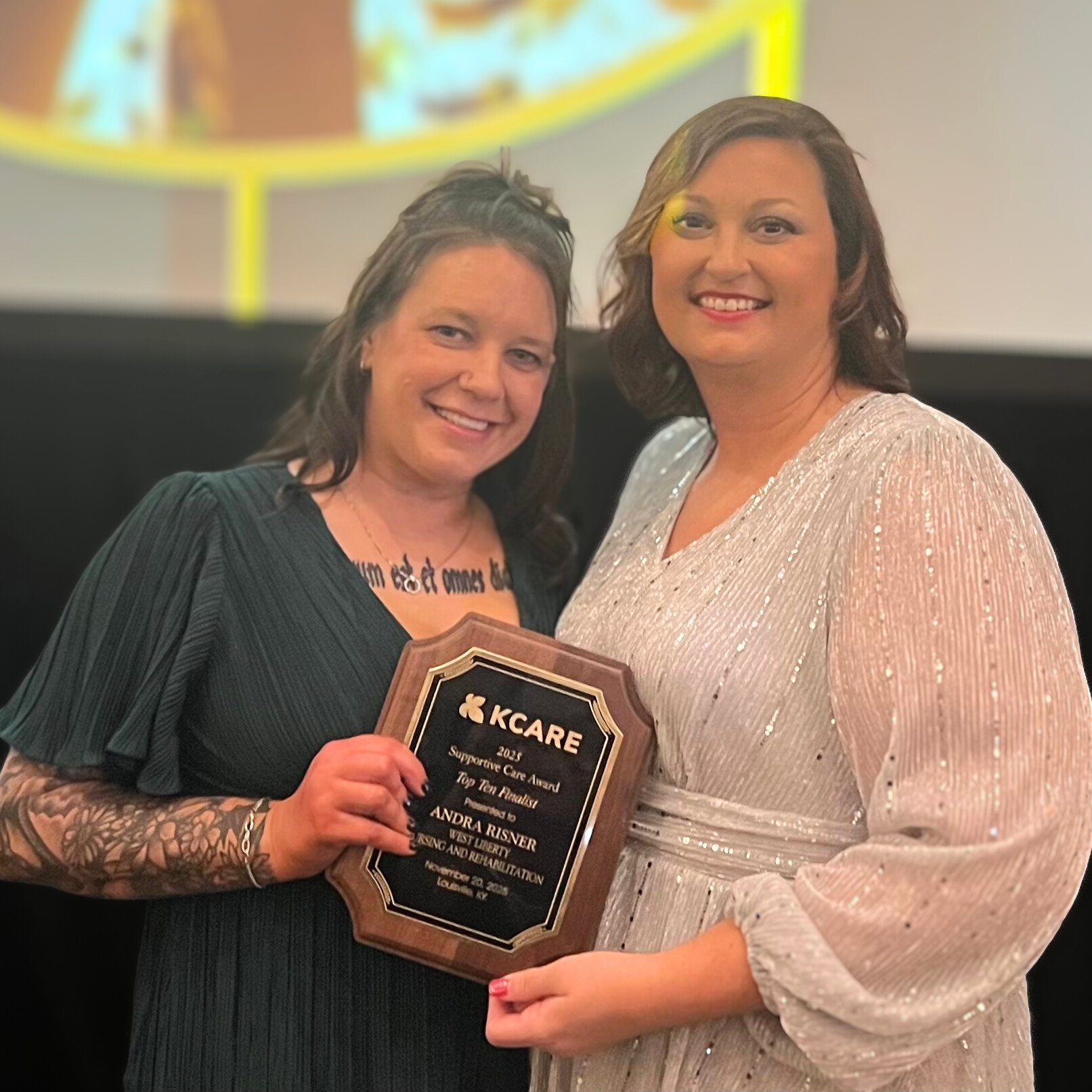
Care Team member Andrea Risner Wins 2025 Quality Award for Supportive Care!

November 26, 2025

On Thursday, November 20, the Kentucky Coalition for Aging Resources and Empowerment (KCARE) recognized top long-term care leaders and heroes in Kentucky at their quality awards banquet. Andrea Risner from West Liberty Nursing and Rehabilitation was honored to be a part of this elite group of leaders in the industry. 

“We were honored to be able to recognize the strength and resilience of our health care heroes. It is a special group of people who dedicate their lives to providing outstanding care and compassion to their residents,” said KCARE President Adam Mather. “This recognition is a testament to their dedication to their residents.” 

The KCARE Quality Awards winners are nominated by their facility. Nominations are then scored blindly by long-term care veterans and mentors. This year, over 400 nominations were submitted for the Quality Awards.  

Long-term care and assisted living providers from across the state attended the Annual Meeting & Expo in Louisville. Participants furthered their knowledge of senior care with a variety of educational options including strategies to cope with stress on the job, hiring and retaining quality staff and regulatory issues. More than 100 vendors exhibited during the expo, showcasing the latest innovations to provide quality care.  

How Much Should I Eat as an Older Adult?

November 25, 2025

Figuring out how much to eat while achieving or maintaining a healthy weight can be difficult. Getting the proper nutrients and eating the right amount for your weight and activity level can contribute to healthy aging. This article provides suggestions for how older adults can get the nutrients they need within a recommended daily number of calories.

How many calories do you need?

A calorie is a unit of measurement that describes how much energy is released when your body breaks down food. Although calorie count alone does not dictate whether a food is nutritious, thinking about how many calories you need can guide healthy eating habits. If you are over age 60 and you want to maintain your current weight, how many calories do you need to eat each day? The Dietary Guidelines suggest:

For a WomanCalories
Not physically active1,600
Moderately active1,800
Active lifestyle2,000-2,200
For a ManCalories
Not physically active2,000-2,200
Moderately active2,200-2,400
Active lifestyle2,400-2,600

Unsure which activity category you’re in? Consult the Dietary Guidelines for definitions of each level. You can increase your physical activity level by adding walking, jogging, dancing, recreational sports, and other similar approaches to your day.

Serving and portion sizes

A “serving size” is a standard amount of a food, such as a cup or an ounce. Serving sizes can help you when choosing foods and when comparing similar items while shopping, but they are not recommendations for how much of a certain food to eat.

The term “portion” means how much of a food you are served or how much you eat. A portion size can vary from meal to meal. For example, at home you may serve yourself two small pancakes in one portion, but at a restaurant, you may get a stack of four pancakes as one portion. A portion size may also be bigger than a serving size. For example, the serving size on the nutrition label for your favorite cereal may be 1 cup, but you may actually pour yourself 1½ cups in a bowl.

Portion size can be a problem when eating out. To keep your portion sizes under control, try ordering smaller appetizers instead of an entrée as your meal, or share an entrée with a friend. Or eat just one-half of an entrée and take the rest home to enjoy as a meal the next day.

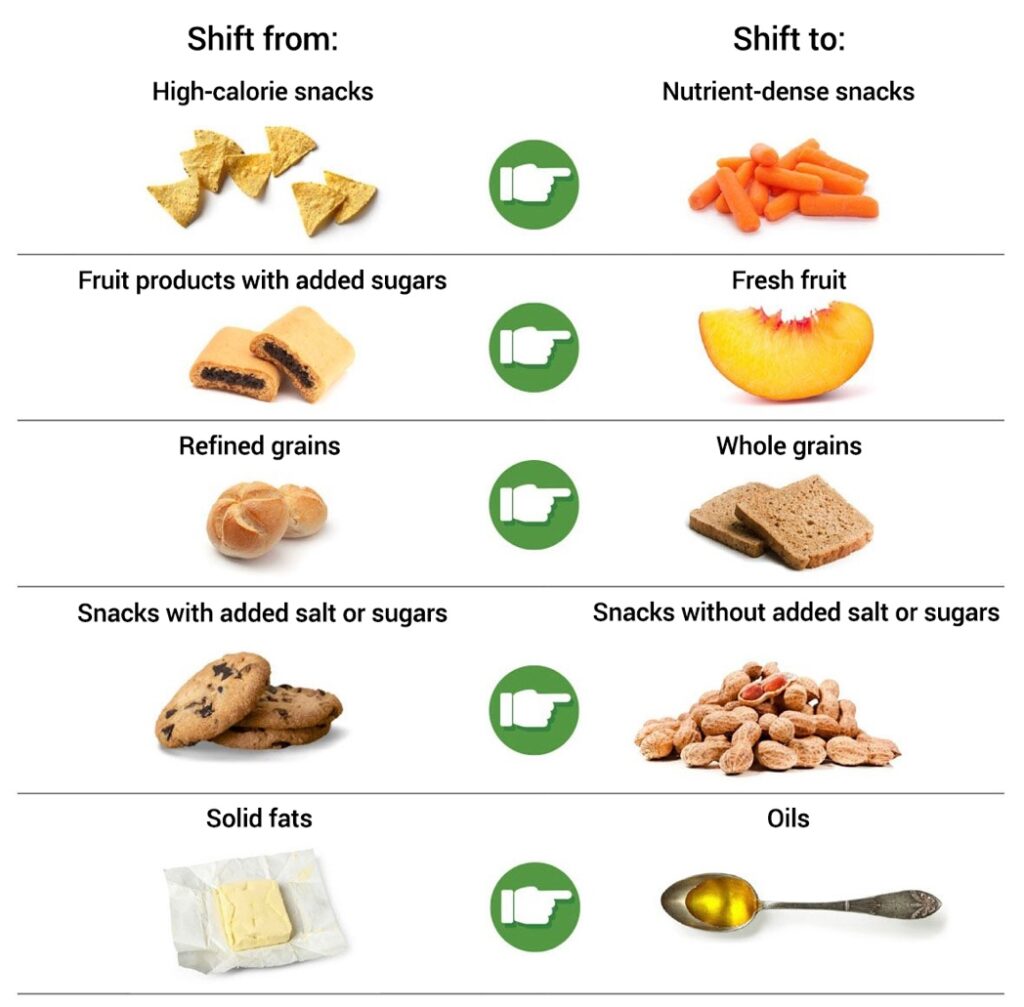
Healthy food shifts

Eating the right amount is important, but so is making sure you’re getting all the nutrients you need. Older adults often need fewer calories, but more nutrients, which makes it essential to eat nutrient-dense foods. To eat nutrient-dense foods across all the food groups, you may need to make some changes in your food and beverage choices. You can move toward a healthier eating pattern by making shifts in food choices over time. Here are some ideas:

Check out these tips for planning healthy meals as you get older.

Healthy beverage shifts

It’s easy to forget about calories you consume from beverages. If you drink sodas, creamy and sweet coffee drinks, or alcohol, swapping them out for healthier options can make a huge difference. There are plenty of beverage options that are low in added sugars, saturated fats, and sodium. Here are some options:

100-calorie snacks

Another way to think about the idea of nutrient-dense and calorie-dense foods is to look at a variety of foods that all provide the same calories. Let’s say that you wanted to have a small snack. You might choose:

  • A 7- or 8-inch banana
  • 20 peanuts
  • 3 cups low-fat popcorn
  • Two regular chocolate-sandwich cookies
  • 1/2 cup low-fat ice cream
  • One scrambled large egg cooked with oil
  • 2 ounces baked chicken breast with no skin

These choices all have about 100 calories but provide different amounts of nutrients. The right choice for you may depend on what else you’re eating throughout the day.

Eating healthy is not just about how much you eat, it’s also about what you eat. Older adults should try to eat foods that are packed with nutrients while limiting foods that are high in calories but provide few nutrients. Swapping out snacks and beverages with nutrient-dense alternatives can help you get the nutrients you need while staying within your recommended number of calories.

To learn more, please visit https://www.nia.nih.gov/health/healthy-eating-nutrition-and-diet/how-much-should-i-eat-quantity-and-quality.

Taking Care of Yourself: Tips for Caregivers

November 10, 2025

Taking care of yourself is one of the most important things you can do as a caregiver. Caregiving is not easy — not for the caregiver and not for the person receiving care. It requires sacrifices and adjustments for everyone. Often, family caregivers must juggle work and family life to make time for these new responsibilities.

Caring for an older adult can also be rewarding. Many people find that caregiving provides a sense of fulfillment and that they like feeling useful and needed. But the ongoing demands of taking care of someone else can strain even the most resilient person. That’s why it’s so important for you to take care of yourself. This article can help you find ways to look out for your own well-being so you can be there for others.

How do you know if you need help?

Caregivers do a lot for others. Because there is so much on their plate, many caregivers don’t spend time taking care of themselves. For example, they are less likely than others to get preventive health services, like annual checkups, and to practice regular self-care. As a result, they tend to have a higher risk of physical and mental health issues, sleep problems, and chronic conditions such as high blood pressure. They are even at an increased risk of premature death.

It’s not always obvious when a person needs help. Watch out for these signs of caregiver stress:

  • Feeling exhausted, overwhelmed, or anxious
  • Becoming easily angered or impatient
  • Feeling lonely or disconnected from others
  • Having trouble sleeping or not getting enough sleep
  • Feeling sad or hopeless, or losing interest in activities you used to enjoy
  • Having frequent headaches, pain, or other physical problems
  • Not having enough time to exercise or prepare healthy food for yourself
  • Skipping showers or other personal care tasks such as brushing your teeth
  • Misusing alcohol or drugs, including prescription medications

Don’t wait until you are completely overwhelmed. Learn what your own warning signs are and take steps to minimize sources of stress where possible.

How can you ask others to help?

When people have asked you if they can lend a hand, have you told them, “Thanks, but I’m fine”? Accepting help from others isn’t always easy. You may worry about being a burden, or you may feel uncomfortable admitting that you can’t do it all yourself. But many caregivers later say they did too much on their own, and they wished they had asked for more support from family and friends.

Understand that many people want to help, and it makes them feel good to contribute. If asking for help is hard for you, here are some tips that may help:

  • Ask for small things at first, if that makes it easier for you. Many large jobs can be broken down into simpler tasks.
  • If you aren’t comfortable asking face-to-face, send a text or email with your request.
  • Consider a person’s skills and interests when thinking about how they could help.
  • Be prepared with a list of things that need to be done, and let the other person choose what they’d like to do.
  • If someone offers to help, practice saying, “Thanks for asking. Here’s what you can do.”
  • Be honest about what you need and what you don’t need. Not every offer is going to be helpful.
  • Be prepared for some people to say “no,” and don’t take it personally.
What else can a caregiver do if they’re feeling overwhelmed?

If you’re feeling overwhelmed by caregiving, tending to your own needs may be the last thing on your mind. But taking time for yourself can actually make you a better caregiver. If you can find small ways to lower your stress and boost your mood, you’ll have more strength and stamina to take care of someone else.

Below are some suggestions that may help when you’re feeling overwhelmed. Remember that you don’t have to do everything all at once, especially if the thought of self-care just makes you feel more exhausted.

  • Be active. Find something active that you enjoy. That might be walking, dancing, gardening, or playing with a pet. Even short periods of exercise can be beneficial.
  • Eat well. Work on having a well-balanced diet that includes a variety of healthy foods. Drink plenty of water every day.
  • Prioritize sleep. Aim to get seven to nine hours of sleep each night. Develop a relaxing bedtime routine to make it easier to fall asleep. Try to go to sleep and get up at the same time each day.
  • Reduce stress. Experiment with relaxation techniques like meditation, tai chi, or yoga. Download a smartphone app with guided meditations or relaxing music. Many of these apps are free.
  • Make time to relax. Carve out time each week to do something you enjoy that has nothing to do with caregiving. It can be as simple as watching a favorite TV show, reading a magazine, or working on a hobby.
  • Keep up with your own health. Make that doctor’s appointment you’ve been putting off. Tell your doctor that you’re a caregiver: They may be able to suggest resources online or in your community.
  • Reach out for support. Talk to a trusted family member or friend or seek counseling from a mental health professional. Join an online or in-person support group for caregivers. These are people who will know what you’re going through and may have suggestions or advice.
  • Take a break if you need it. Ask another family member or friend to step in, hire an aide to come for a few hours a week, or sign up the older person for an adult day care program.
  • Be kind to yourself. You don’t have to pretend to be cheerful all the time. Feelings of sadness, frustration, and guilt are normal and understandable. Express your feelings by writing in a journal or talking with a friend.

Remember that you are doing the best you can and that you are not alone. Many caregivers have trouble tending to their own health and well-being. But give yourself credit for everything you’re doing. Your caregiving makes a big difference in someone else’s life.

If you’re not the primary caregiver, how can you support that person?

In many cases, one person takes on most of the everyday responsibilities of caring for an older person. It tends to be a spouse or the child or sibling who lives closest. If you are not the primary caregiver, you can still play an important role in supporting that person.

Be sure to acknowledge how important the primary caregiver is in the older person’s life. Also, discuss the physical and emotional effects caregiving can have on people. Although caregiving can be satisfying, it also can be very hard work.

You can lighten the primary caregiver’s load by providing emotional support, taking on specific tasks, and even providing full-time care for a short period of time to give the primary caregiver a break. Ask them what you can do that would be most helpful. Staying in contact by phone or email might also take some pressure off the primary caregiver. Just listening may not sound like much, but it can mean a lot.

A primary caregiver — especially a spouse or partner — may be hesitant to ask for a break. Here are some ways you could help them get the rest they need:

  • Offer to stay with the older person for one afternoon a week, for example, so the primary caregiver can have some personal time.
  • Arrange for regular respite care in the form of a volunteer, an in-home aide, or an adult day care program.
  • If you live far away, travel to stay with the older person for a few days so the primary caregiver can take a vacation or just have some time off.

In time, the older person may have to move to a residential (live-in) facility, such as assisted living or a nursing home. If that happens, the primary caregiver will need your support. You can work together to select a facility and coordinate the move. The primary caregiver may need extra support while adjusting to the person’s absence and to living alone at home. To learn more, please visit https://www.nia.nih.gov/health/caregiving/taking-care-yourself-tips-caregivers.


Coping With Agitation, Aggression, and Sundowning in Alzheimer’s Disease

November 4, 2025

People with Alzheimer’s disease may become agitated or aggressive as the disease gets worse. Agitation means that a person is restless and worried, and they aren’t able to settle down. Agitated people may pace a lot, not be able to sleep, or act aggressively toward others. They may verbally lash out or try to hit or hurt someone. When these problems start to happen or worsen in the late afternoon or early evening, it’s called sundowning. On this page, learn about the causes of agitation, aggression, and sundowning and how to manage them.

Causes of agitation and aggression

Most of the time, agitation and aggression happen for a reason. When they happen, try to find the cause, then talk with a health care provider about possible solutions. Causes of agitation and aggression can include:

  • Paindepression, or stress
  • Too little rest or sleep
  • Constipation
  • Sudden change in a well-known place, routine, or person
  • A feeling of loss — for example, the person may miss the freedom to drive
  • Too much noise or confusion, or too many people in the room
  • Being pushed by others to do something — for example, to bathe or to remember events or people — when Alzheimer’s has made the activity very hard or impossible
  • Feeling lonely and not having enough contact with other people
  • Certain medications or interactions between two medications

A doctor can give the person with Alzheimer’s a medical exam to look for any physical problems that may cause agitation and aggression, and in certain cases, may prescribe medication to ease the symptoms.

Tips for coping with agitation or aggression

Here are some ways you can help minimize and cope with agitation or aggression:

  • Be patient and try not to show frustration. Speak calmly. Listen to the person’s concerns and avoid arguing. Reassure the person that they are safe, and that you are there to help. Use other communication methods besides speaking, such as gentle touching, to help them calm down. Take deep breaths and count to 10 if you get upset.
  • Create a comforting home setting. Try to keep to a routine, such as bathing, dressing, and eating at the same times each day. Reduce noise and clutter. Play soothing music and keep well-loved objects and photos around the home. Let in natural light during the day. Slow down and try to relax if you think your own worries may be causing concern.
  • Try focusing on an object or activity. Distract the person with a snack, beverage, or activity. You could watch a favorite TV show, listen to music, go for a walk, read a book, or do a household chore, such as folding laundry, together.
  • Protect yourself and others if needed. Hide or lock up car keys and items that could be used in a harmful way, such as guns and kitchen knives. If your loved one becomes aggressive, stay at a safe distance until the behavior stops. Talk to a doctor if aggressive behaviors worsen and consider medications that may help. In an emergency, call 911 and explain that your loved one has dementia.
  • Sundowning: Avoiding Late-Day Confusion

When restlessness, agitation, irritability, and confusion happen as daylight begins to fade, it’s known as sundowning. Being overly tired can increase late-afternoon and early-evening restlessness. Try taking these steps with the person living with dementia to help prevent sundowning:

  • Stick to a schedule.
  • Arrange a time to go outside or sit by a window to get sunlight each day.
  • Aim to be physically active each day, but don’t plan too many activities.
  • Avoid alcoholic drinks and beverages with caffeine, such as coffee or cola, late in the day.
  • Discourage long naps and dozing late in the day.

To learn more, please visit https://www.nia.nih.gov/health/alzheimers-changes-behavior-and-communication/coping-agitation-aggression-and-sundowning.